
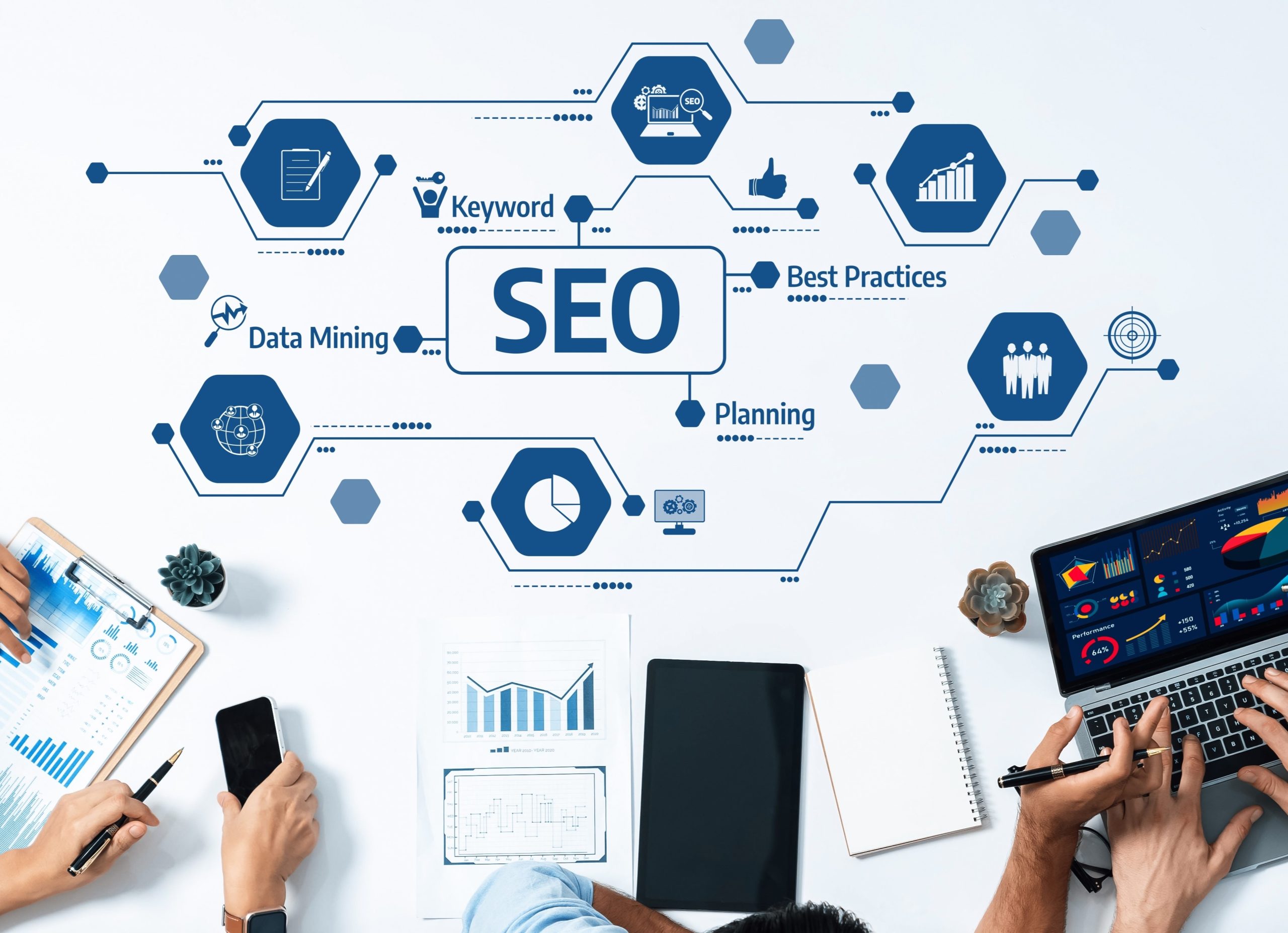
By the time most people “discover” your brand, Google has already met you.
Not you as in the founder behind the logo, or the team behind the product.
Google meets your brand as a trail of digital footprints: a homepage that loads (or doesn’t), reviews scattered across directories, a Knowledge Panel that may or may not be accurate, third-party articles that frame your reputation, and content that signals whether you’re credible enough to be recommended.
That’s why the old debate—Is SEO about reputation or revenue?—now feels like the wrong question.
In 2026, SEO is both: it shapes perception about your brand (or your organization) and it simultaneously influence the manner you react to the brand and in some instances, leading to the purchasing behaviour, often in the same session.
And as AI-driven search dominated by ChatGPT, Gemini and Claude become the front door for discovery, brands that treat SEO as “just traffic” are learning the hard way that rankings are only the visible tip of a much deeper system.
Now let’s look at the bigger picture.
The SEO market: not small, not optional
Globally, the SEO services market is already massive and still growing. One industry tracker estimates it will climb from US$92.74B in 2025 to US$108.28B in 2026 (16.8% CAGR). It serves value to the whole digital marketing ecosystem consisting of brand owners, products and services.
Even if you discount market-research hype, the direction is obvious: businesses keep investing in SEO because organic visibility remains one of the few channels where trust and intent can compound over time without dependent on heavy marketing spend.
Malaysia follows the same pattern in recent years, accelerated by two local realities:
- Mobile-first behaviour (search happens “in the moment,” not at a desk).
- Marketplace gravity (Shopee/Lazada/Grab influence discovery, but Google still controls brand verification for many categories).
So the practical question by many Malaysian companies isn’t “Should we do SEO?”
It’s more to the question of “What kind of SEO actually changes brand outcomes?”
Digital footprints: the technical plumbing behind “trust”
As an ex-SEO engineer and digital marketer, I’ll say the quiet part out loud: search engines don’t “trust” brands the way humans do. They approximate trust by measuring consistency, credibility, and usefulness at scale.
To put in context, there are 200 “trust signals” set by Google with each signal having its own score. Therefore, for any companies wanting to adhere to Google’s expectations may require a substantial amount of time and effort to build that digital footprint via the SEO route.
Now, lets think of SEO as building three layers of digital footprint:
1) Crawlable reality: can Google reliably access you?
If your site is slow, blocked, broken on mobile, or messy with duplicate pages, you’re effectively invisible—or worse, misinterpreted. Technical SEO is less glamorous than content marketing, but it determines whether your brand is even eligible to be surfaced when users search.
2) Indexable meaning: can Google understand what you are?
This is where web or page structure matters: clean site architecture, clear internal linking, well-defined categories, and (in many cases) structured data. Google’s own documentation explains that search uses multiple systems to interpret meaning, including AI-based systems (like RankBrain) and other understanding systems (like neural matching).
In plain English: Google is not matching keywords as much as it’s matching concepts, entities, and intent. So its best to make it clear from day one when designing your website.
3) Rankable reputation: should Google show you over alternatives?
This is the layer brand owners often underestimate. Reputation is not just “glossy customer reviews.” It’s the sum of signals that indicate your site and your brand are a good bet (and reliable): helpful content, consistent business details, credible mentions, and demonstrable expertise.
In this case social mentions, news or opinion articles on news, verified customer reviews on credible sites such as TrustPilot or Tripadvisor may add credibility to your brand reputation.
Google publicly frames this as prioritising content that demonstrates Experience, Expertise, Authoritativeness, and Trustworthiness (E-E-A-T).
And here’s the punchline: these same signals increasingly affect AI-powered answers, not just “ten blue links.”
The AI shift: why SEO now influences brand narrative
Search has been using AI in ranking systems for years (RankBrain, BERT, and more). Google’s own Search Central documentation describes BERT as a system to better understand meaning and intent, and it describes MUM as capable of understanding and generating language (used in specific applications).
But the bigger shift is presentation.
In July 2024, Google published a plain-language explainer on AI Overviews, describing how they use a customised Gemini model working “in tandem” with existing search ranking and quality systems, and that Overviews are designed to surface information backed by top web results (with links).
Translation for brand owners in 2026: your reputation can now be summarised before a user even clicks, and that makes content SEO more important than ever.
This is why the “SEO vs. reputation management” boundary is dissolving. If AI summaries pull from the most corroborated, consistent, and reputable sources, then:
- weak brand signals don’t just reduce traffic;
- they can allow competitors, aggregators, or outdated pages to define you.
Industry commentators have been warning that online reputation management now needs to consider generative AI as part of how brands are perceived in search given the dynamic nature of Large Language Model (LLM) engine behind the AI-driven outputs.
The AI shift: why SEO now influences brand narrative
Search has been using AI in ranking systems for years (RankBrain, BERT, and more). Google’s own Search Central documentation describes BERT as a system to better understand meaning and intent, and it describes MUM as capable of understanding and generating language (used in specific applications).
But the bigger shift is presentation.
In July 2024, Google published a plain-language explainer on AI Overviews, describing how they use a customised Gemini model working “in tandem” with existing search ranking and quality systems, and that Overviews are designed to surface information backed by top web results (with links).
Translation for brand owners in 2026: your reputation can now be summarised before a user even clicks, and that makes content SEO more important than ever.
This is why the “SEO vs. reputation management” boundary is dissolving. If AI summaries pull from the most corroborated, consistent, and reputable sources, then:
- weak brand signals don’t just reduce traffic;
- they can allow competitors, aggregators, or outdated pages to define you.
Industry commentators have been warning that online reputation management now needs to consider generative AI as part of how brands are perceived in search given the dynamic nature of Large Language Model (LLM) engine behind the AI-driven outputs.
Does SEO actually drive sales?
Yes—but not always in the simplistic “rank → click → buy” way people imagine. According to many SEO experts including former Google employees, SEO drives sales through at least four pathways:
Pathway A: capturing high-intent demand
If someone searches “best private hospital KL for cardiology” or “Halal skincare for sensitive skin Malaysia”, they’re often already in evaluation mode. Ranking well here is not branding fluff; it’s demand capture.
Pathway B: reducing perceived risk
A lot of purchases—especially health, finance, property, travel—are risk decisions. Users check search results to validate legitimacy: “Is this company real? Are there complaints? Is it safe?”
If your brand owns page one (site pages, knowledge panel accuracy, credible reviews, third-party mentions), you reduce uncertainty. That directly increases conversion rate.
Pathway C: compounding familiarity
People rarely buy from a brand the first time they see it—unless the product is cheap and low risk. SEO content that answers questions across the funnel (“what is”, “how to choose”, “best”, “pricing”, “near me”) builds repeated exposure. Repetition becomes familiarity; familiarity becomes preference.
Pathway D: shaping post-purchase loyalty
SEO isn’t just acquisition. Knowledge-base content, troubleshooting pages, return policy clarity, warranty pages, and “how to get the most out of your product” content reduce customer service friction. That improves reviews, repeat purchase, and word-of-mouth—which feeds back into search visibility.
If you want a more academic angle, recent research studies (outside Malaysia) continue to find positive associations between SEO, brand awareness, and purchase intention.
Malaysian examples: what SEO looks like in practice
Malaysia has a wide SEO maturity curve: some brands run sophisticated organic strategies; many SMEs still treat SEO as a one-time “set up my website” task. You may not get good results if you are spending RM 800 per month for 3 months hoping to get on the 1st page of every keyword search on Google.
Here are patterns seen locally, using public case studies and common market behaviour for many Malaysian companies adopting SEO as part of their digital marketing strategy.
1) Established brands: SEO as demand capture + credibility reinforcement
Large Malaysian-linked brands in competitive categories (like travel) have long treated search visibility as a strategic lever, not a marketing afterthought. Agencies have published SEO case studies describing how AirAsia targeted competitive commercial-intent queries across multiple markets, combining on-page and off-page work to rank for profitable keywords.
Even if you treat agency case studies with healthy skepticism (you should), the strategic lesson still holds: big brands don’t “do SEO.” They build organic advantage around high-intent journeys to reduce marketing and advertising spend over the longer period.
2) SMEs and new brand owners: local SEO as the first revenue engine
For many Malaysian SMEs—cafés, clinics, workshops, boutique services—local search is the closest thing to “free leads.” When your Google Business Profile, location pages, and reviews are well-managed, you show up when users search near me or search by neighbourhood.
So Local SEO packages are preferred by many smaller Malaysian companies and by local startups with limited budget. Affordable SEO packages from RM 800 to RM 2,500 per month for 6 months generally yield better results in the SERP, ranking 1st in selected keywords based on a certain niches.
A Malaysian agency case study on a Johor restaurant described local SEO work that drove significant organic growth, specifically aiming to appear for location-based queries that map to real foot traffic.
Again: the exact numbers are less important than the mechanism. Local SEO converts because it matches immediate intent with immediate proximity. Pairing it with positive genuine customer reviews on Google may help to elevate leads, sales and better foot traffic for clinics, or F&B operators adopting SEO as part of their digital marketing strategy.
3) E-commerce: SEO as the product catalog’s distribution system
Malaysia’s e-commerce ecosystem often starts on marketplaces like Shoppee or Lazada—but brands that want long-term margin eventually need their own demand channel / own eCommerce website store. That’s where SEO meets product data quality: clean category structure, consistent product information, and content that answers “comparison” and “best for” queries.
On the marketplace side, “Shopee SEO” has become its own discipline because internal search rankings and Shoppee search algorithm influence sales velocity and seller reputation inside the platform. The broader point: in Malaysia, search optimisation happens both on Google and inside super-app ecosystems—and customers treat both as discovery engines.
This works the same way for product seller on Amazon, as off-page product SEO brings equally if not better benefit to drive customers to the storefront on marketplaces like Amazon.
So—reputation or sales? The answer is “yes,” but with a warning
Coming back to the question, so yes SEO improves brand reputation when it improves the customer’s experience of researching about you or your brand.
That means:
- your content answers real questions (not generic keyword fluff),
- your site performs well,
- your business info is consistent everywhere,
- and third-party signals back up your claims.
Google’s own guidance on “helpful, reliable, people-first content” explicitly ties ranking performance to demonstrating E-E-A-T characteristics via multiple signals.
And as AI Overviews integrate core ranking and quality systems into AI responses, the cost of weak trust signals rises: you’re not only losing clicks—you’re losing control of the narrative.
What to do next: short-term fixes vs long-term outcomes
If you’re a new brand owner, startup, or an established organisation trying to modernise, here’s the practical playbook—and what outcomes to expect.
Short-term SEO (weeks to 2–3 months): “stop the bleeding” and unlock quick wins
What it includes:
- Technical hygiene (indexation issues, broken pages, mobile UX, speed bottlenecks)
- Basic on-page improvements (titles, internal linking, intent alignment)
- Local SEO foundations (Google Business Profile optimisation, NAP consistency, review flow)
- Fixing content that misrepresents you (outdated pages, confusing messaging)
What you can reasonably expect:
- Better crawl/index coverage
- Improved branded search results (“when people Google you, it looks credible”)
- Local visibility lift for near me and map pack queries (if you’re a physical business)
- Early conversion-rate improvement from cleaner UX
Long-term SEO (3–12+ months): compounding authority that drives reputation and revenue
What it includes:
- Topic clusters built around real customer journeys
- Content that demonstrates lived experience and expertise (E-E-A-T in practice)
- Digital PR and credible mentions (not spammy link building)
- Structured data and entity consistency (so search systems “understand” your brand)
- Measurement discipline: tying search visibility to leads, sales, and retention
What you can reasonably expect:
- Stable rankings for competitive commercial queries
- Higher quality inbound leads (more educated, less price-sensitive)
- Stronger brand recall (rising branded searches over time)
- Better resilience when algorithms shift (because you’re building real usefulness)
Why professional, data-driven SEO matters now
Modern SEO isn’t a checklist. It’s a system that sits at the intersection of engineering, content strategy, brand trust, and analytics.
A professional SEO team should be able to show you:
- what pages are actually driving revenue (not just traffic),
- where users drop off and why,
- which queries map to which stage of the customer journey,
- and how your brand appears across both classic results and AI-influenced experiences.
Parting Thoughts
The brands that win in the next wave won’t be the ones that “game Google.” They’ll be the ones that build the most coherent, credible, and useful digital footprint with the help of SEO experts that understand data and consumer behaviour. Whether a customer is reading a list of links or an AI-generated summary from AI-Overview or ChatGPT, the answer still points back to them.
If you need SEO experts to do the heavy lifting for you, Berkshire Media is one of the top SEO agency that is backed by data-driven approaches, decades of media monitoring and experience in managing brand reputation for local and international brands/companies.
Free SEO Consultation
Contact us now and get free SEO advice, consultation and strategy. Win more customers, improve brand reputation and product visibility across traditional search engines and AI-driven search results.

About the Author
Shahid Shayaa is the founder and managing director of Berkshire Media. He specializes in data-driven communication strategies and insights using social data analytics, social media monitoring tools and machine learning text algorithms for more than 13 years. As an expert in the field of media monitoring, issue management and managing reputation risks for companies, he is involved in various research studies in this field and published various scientific papers on social data analytics, sentiment analysis and back-end algorithms on consumer sentiment, emotions and behaviour for marketers and campaign managers.
His research work and studies have been cited more than 467 times, inspiring new research in the field of social analytics in Malaysia. You may view his work here.